304 North Cardinal St. Dorchester Center, MA 02124
In today’s rapidly evolving digital landscape, organizations face an increasingly complex array of IT risks that can potentially impact their operations, reputation, and bottom line. A structured IT risk assessment lifecycle is no longer optional – it’s a critical component of modern enterprise risk management. This comprehensive guide explores the systematic approach to identifying, analyzing, and managing IT risks in alignment with frameworks like NIST SP 800-30, ISO 27001, and ISACA’s Risk IT Framework.
Understanding the IT Risk Assessment Lifecycle
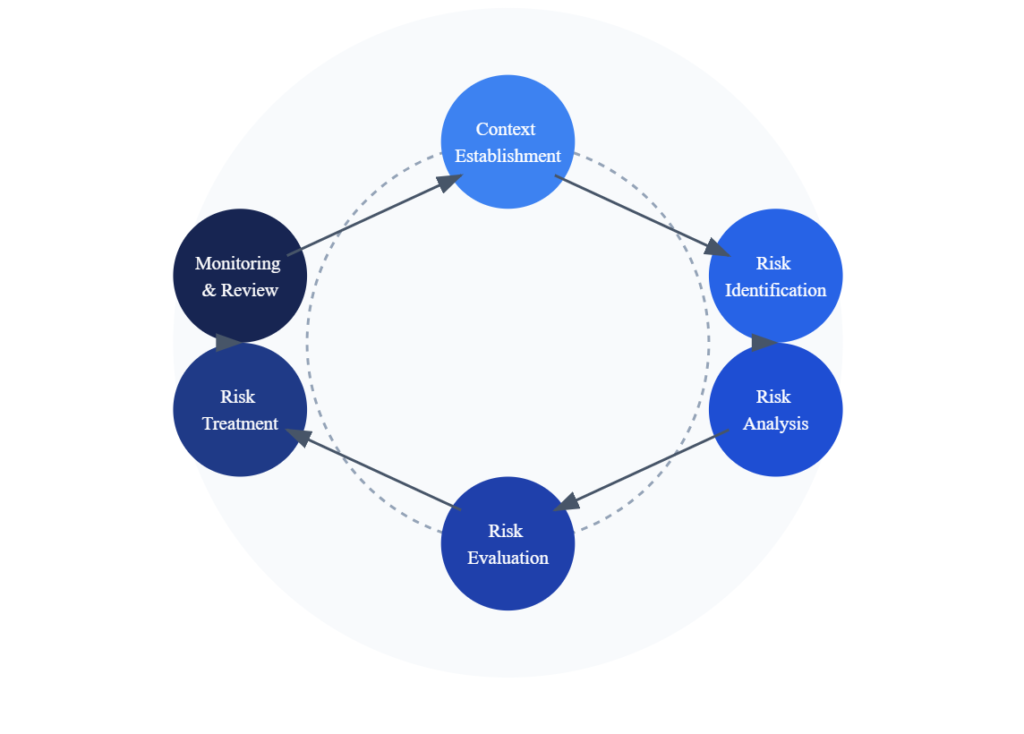
The IT risk assessment lifecycle is an iterative process that helps organizations maintain a proactive stance toward security and compliance. Unlike traditional point-in-time assessments, this lifecycle approach ensures continuous monitoring and adaptation to emerging threats.
Core Components of the Lifecycle:
Phase 1: Context Establishment
The foundation of any effective risk assessment begins with establishing the organizational context. This phase involves understanding both internal and external factors that could influence the risk landscape.
Internal Context
Strategic objectives, governance structure, risk appetite, and existing controls form the internal context that shapes risk assessment parameters.
External Context
Regulatory requirements, market conditions, technological changes, and threat landscape constitute the external factors affecting risk assessment.
Phase 2: Risk Identification
Risk identification is a systematic process of recognizing and documenting potential risks that could affect the organization’s information assets. This phase leverages multiple sources and techniques to create a comprehensive risk register.
Asset-based risk identification focuses on critical information assets and their vulnerabilities. Threat-based identification examines potential attack vectors and scenarios. Process-based identification evaluates risks within business processes and workflows.
Phase 3: Risk Analysis
The analysis phase involves a detailed examination of identified risks to understand their potential impact and likelihood. This quantitative and qualitative analysis helps prioritize risks and allocate resources effectively.
Analysis Components:
Impact Assessment: Evaluating potential business impact across multiple dimensions including financial, operational, and reputational aspects.
Likelihood Assessment: Determining the probability of risk occurrence based on historical data, threat intelligence, and environmental factors.
Control Effectiveness: Analyzing the efficiency of existing controls in mitigating identified risks.
Phase 4: Risk Evaluation
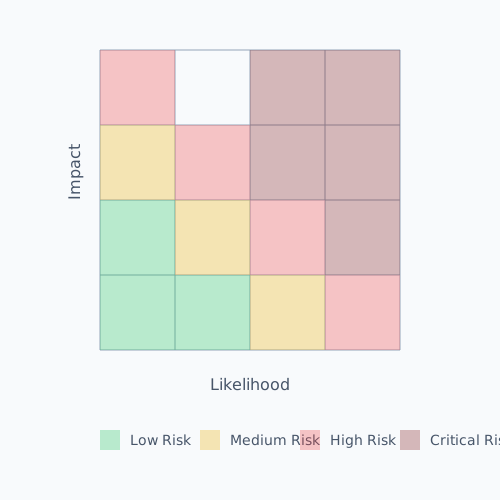
Risk evaluation involves comparing analyzed risk levels against established risk criteria to make informed decisions about risk treatment priorities. This phase bridges the gap between analysis and action.
Evaluation Framework:
Risk evaluation matrices combine impact and likelihood scores to determine risk levels. Organizations typically categorize risks into different tiers (Critical, High, Medium, Low) based on their overall risk scores.
Phase 5: Risk Treatment
Risk treatment involves selecting and implementing appropriate control measures to modify risk levels. Treatment strategies should align with organizational risk appetite and available resources.
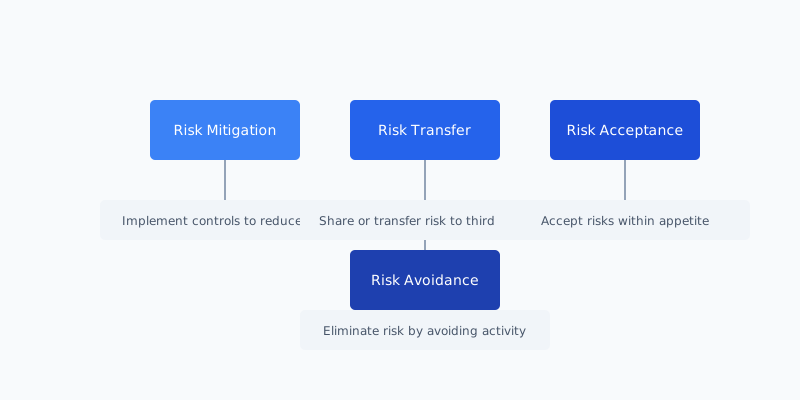
Treatment Options:
Risk Treatment Options
Risk Mitigation: Implementing controls to reduce risk likelihood or impact
Risk Transfer: Sharing or transferring risk through insurance or third-party agreements
Risk Acceptance: Formally accepting risks that fall within appetite thresholds
Risk Avoidance: Eliminating risk by discontinuing associated activities
Phase 6: Monitoring and Review
The final phase ensures the effectiveness of implemented controls and maintains the currency of risk assessments through continuous monitoring and periodic reviews.
Key Monitoring Activities:
Continuous monitoring of control effectiveness and risk indicators
Regular review of risk assessment results and treatment plans
Updating risk registers based on new threats or changes in business environment
Reporting to stakeholders on risk status and treatment progress
Best Practices and Recommendations
To maximize the effectiveness of your IT risk assessment lifecycle:
1. Maintain clear documentation throughout the entire process
2. Ensure stakeholder engagement at all phases
3. Leverage automation tools for continuous monitoring
4. Regularly validate assumptions and update assessments
5. Align with relevant frameworks (NIST, ISO 27001, ISACA)