Physical Address
304 North Cardinal St.
Dorchester Center, MA 02124
Physical Address
304 North Cardinal St.
Dorchester Center, MA 02124

Why GRC software outperforms Excel spreadsheets for IT audit, compliance, and cyber-risk management - aligned to ISACA, NIST, ISO 27001, SOC 2, SAMA and NCA ECC.
Governance · Risk · Compliance
Excel has served IT audit and compliance teams for decades. But as regulatory obligations multiply and threat landscapes shift, relying on spreadsheets is no longer a neutral choice — it is an accumulating liability.
Governance, Risk and Compliance (GRC) has always demanded precision. Today it also demands speed, traceability, and continuous oversight — three qualities that spreadsheets fundamentally cannot provide at scale. This article makes the technical and business case for purpose-built GRC platforms, aligned to ISACA, NIST CSF 2.0, ISO/IEC 27001:2022, SOC 2, and the Saudi Arabian Monetary Authority (SAMA) Cybersecurity Framework.
Picture a shared Excel workbook, colour-coded by risk level, updated quarterly before audits, and quietly maintained by one or two people who are the only ones who truly understand it. For years, this has been the de facto GRC infrastructure of countless organisations across the Gulf region and beyond. It works — until a regulatory change arrives, a staff member leaves, or an auditor asks for a complete change history.
The problem is not that spreadsheets are bad tools. Excel remains extraordinarily powerful for financial modelling, ad hoc analysis, and rapid prototyping. The problem is that GRC work does not scale in spreadsheets. Controls multiply. Regulations change. Evidence must be collected continuously, not reconstructed from memory the week before an audit. And when your entire compliance programme lives in a shared file, version control becomes a fiction and auditability becomes a hope.
Consider the common scenario: a new financial regulation is published. The compliance team updates their policy spreadsheet. But no automated linkage notifies the internal audit function, and no workflow enforces a re-assessment of dependent controls. By the time the next audit cycle arrives, critical gaps have opened — gaps that a connected GRC platform would have surfaced within hours.
The limitations of spreadsheet-based GRC are not merely inconveniences. In regulated sectors — banking, insurance, energy, healthcare, government — they translate directly into audit findings, regulatory sanctions, and reputational exposure.
| Capability | Excel / Google Sheets | Purpose-Built GRC Platform |
|---|---|---|
| Audit trail | None by default; manual workarounds only | Automatic, time-stamped, immutable log of every action |
| Role-based access control | Binary password protection | Granular permissions per user, role, and data object |
| Version control | File-level only; catastrophic merge conflicts | Field-level versioning with diff and rollback |
| Regulatory change management | Manual update; no automatic control linkage | Automated impact propagation across linked controls |
| Evidence collection | Manual file attachments; inconsistent naming | Automated collection with chain-of-custody tracking |
| Multi-framework mapping | Duplicate effort for each framework | Single control mapped to SOC 2, ISO 27001, SAMA simultaneously |
| Real-time risk dashboards | Point-in-time snapshot; stale by next business day | Live risk posture updated on control test results |
| Scalability | Degrades sharply beyond ~200 controls | Scales to thousands of controls across business units |
| Third-party risk management | Separate spreadsheets; no linkage to internal controls | Integrated vendor risk with automated re-assessment workflows |
Organisations frequently justify spreadsheets with one argument: they are free. This is a calculation error. The true cost of spreadsheet-based GRC emerges in three categories that rarely appear in a procurement comparison.
When GRC knowledge lives in a workbook known intimately by one or two individuals, the organisation has created a critical single point of failure. When those individuals are on leave, reassigned, or resign, the compliance programme does not simply pause — it quietly begins to degrade. Controls go untested. Remediation deadlines are missed. Evidence collection lapses. These are exactly the conditions that produce material findings during regulatory examinations.
For organisations managing periodic audits under SAMA’s Cybersecurity Framework or NCA’s Essential Cybersecurity Controls (ECC), audit preparation consumes disproportionate time when GRC lives in spreadsheets. Teams spend weeks gathering files, reconciling conflicting file versions, and reconstructing evidence that should have been captured continuously. Auditors frequently uncover gaps — unclear ownership, untraceable edits, or outdated data — that undermine confidence in the entire compliance programme.
Every quarter that GRC operates in spreadsheets, technical and compliance debt accumulates. Regulations change and control mappings fall out of date. Vendors are re-assessed inconsistently. Risk registers reflect the risk landscape of the last person who edited them, not today’s. This is not choosing simplicity — it is deferring costs that grow with every regulatory change, every audit, and every security incident that touches the control environment.
“The organisations that rely on spreadsheets indefinitely are not choosing simplicity. They are accumulating technical and compliance debt at a rate that compounds with every regulatory change, every audit, and every security incident.” — Underdefense GRC Research, 2026
A modern GRC platform is not a prettier spreadsheet. It is an operational governance engine that connects an organisation’s policies, risk appetite, regulatory obligations, and control frameworks into a single, continuously monitored system of record. Understanding the core architectural components helps IT audit and compliance leaders evaluate platforms against actual operational requirements.
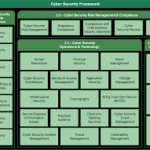
The diagram above illustrates the architectural principle that differentiates GRC platforms from spreadsheets: a single control can be simultaneously mapped to multiple regulatory frameworks, tested once, and its evidence automatically routed to all relevant compliance outputs. In a spreadsheet environment, the same task requires duplicated effort across five separate workbooks.
Not all GRC platforms are created equal. Many early-generation tools were little more than structured databases with reporting layers — essentially, as one industry analyst observed, “glorified spreadsheets in a more sophisticated wrapper.” The following capabilities distinguish genuinely transformative platforms from compliance theatre.
The shift from periodic, point-in-time control testing to continuous monitoring is the most operationally significant capability a GRC platform provides. Rather than preparing evidence packs in the weeks before an audit, the organisation maintains an always-audit-ready posture. Control test results feed directly into the risk register, updating the organisational risk profile in real time.
This capability is particularly critical for organisations operating under SAMA’s requirement for ongoing monitoring of cybersecurity controls, where annual or quarterly reviews are insufficient evidence of sustained compliance.
When a new NCA ECC version is published, or when SAMA issues a cybersecurity circular, a connected GRC platform should automatically identify affected controls, notify control owners, and initiate a re-assessment workflow — without any manual intervention. In a spreadsheet environment, this propagation depends entirely on human judgment and the hope that the right people read the right emails.
ISO/IEC 27001:2022 Annex A Control 5.19 and SAMA’s Cybersecurity Framework both impose explicit requirements on supplier and third-party risk. A GRC platform must link vendor assessments to the internal control environment: if a critical supplier fails a security assessment, the platform should automatically flag all dependent processes and controls, and notify the relevant risk owners. This interconnection is structurally impossible in a spreadsheet environment.
Organisations operating in Saudi Arabia commonly face simultaneous compliance obligations under SAMA, NCA ECC, ISO 27001, and potentially SOC 2 or PCI DSS. A mature GRC platform allows a single control — say, access review — to be mapped to all applicable framework requirements. Evidence collected once satisfies multiple audits, dramatically reducing the compliance burden without reducing assurance quality.
The most common reason organisations delay migrating from spreadsheets is not the licensing cost — it is the perceived implementation burden. A phased approach mitigates this risk and generates early wins that build internal momentum.
The recommended starting point is not a big-bang migration. Begin by identifying the single highest-friction pain point in your current programme: the control domain where evidence collection is most manual, the regulatory framework where change management is most reactive, or the audit cycle where preparation consumes the most resource. Pilot the GRC platform in that domain first. Early wins — an audit finding caught before an examiner saw it, a policy update cycle shortened by several weeks, a board risk report that no longer requires a weekend of manual assembly — build the organisational case for wider adoption far more effectively than any vendor ROI calculator.
The question facing IT audit and compliance professionals in 2026 is no longer whether to move beyond spreadsheets. Regulatory expectations have settled that question. The question is how to make that move in a way that delivers a working, sustainable, continuously monitored compliance programme — without creating a parallel infrastructure burden that consumes the team meant to operate it.
The organisations that invest in purpose-built GRC platforms are not simply buying software. They are transforming compliance from a periodic, resource-intensive exercise into a continuous operational capability — one that produces better audit outcomes, stronger regulatory relationships, and materially lower risk exposure. Against those outcomes, the cost of a well-chosen GRC platform is not an overhead. It is a competitive advantage.
Explore our practical GRC implementation guides, control framework templates, and audit readiness resources — designed specifically for IT audit professionals in regulated industries.
Visit TheAudit.org →